

From AI Discoverability to IRL Connection: Reflections from Cannes Lions 2026

I never expected to be writing my reflections about Cannes Lions from a hospital bed in Arles. After Cannes, I set off on a road trip to Spain and stopped off in the Camargue in France for a horse ride. Unfortunately, the horse had a run in with a Land Rover which was on our trail and I was bucked off – resulting in 3 broken ribs and a pneumothorax – so I can’t fly for 3 weeks.

On a positive note, I have a lot of time to reflect on what I learnt at Cannes, so here are my slightly delayed reflections.
Cannes Lions is five-day International Festival of Creativity held annually. This year was my first time attending, along with 12,000 people from 90 countries. There were multitudes of panels and presentations from a very high-powered talent list, including Oprah, Stella McCartney, Seth Meyers, Kara Swisher and Malcolm Gladwell, to every tech company and brand under the sun – OpenAI, Amazon, Microsoft, Canva, Pinterest, Ikea, Coach, Virgin Voyages, Apple to name a few.
There were three main tensions explored across the week:
The rise of AI and what this means for brands, communicators and humans in general
The shifting power dynamic from advertising and media channels to tech companies and creators
The renewed hunger for IRL connection, cultural relevance and human creativity
Does brand still matter in a world filtered by agentic AI?
AI and discoverability were the hot topic. I have been wondering what this means for brand building and awareness raising when we interact increasingly through LLMs and agents.
The dual-audience dilemma
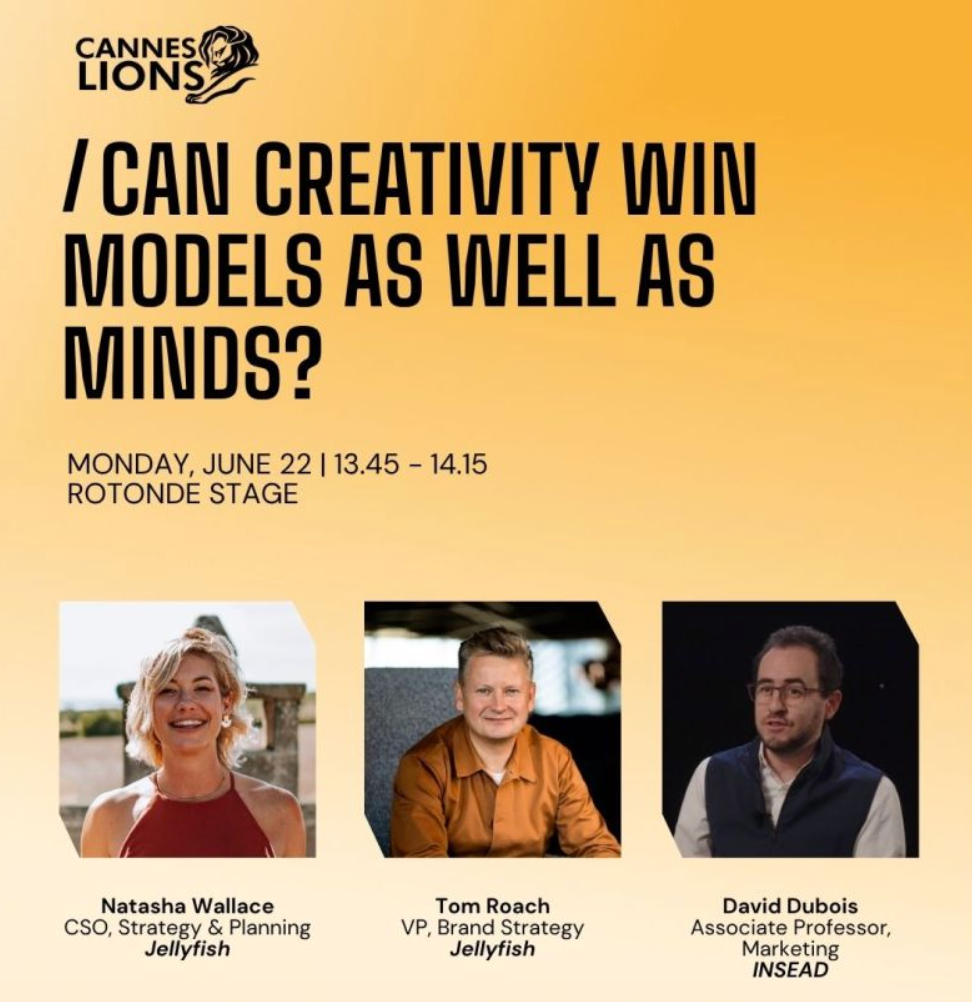
The rise of AI search and LLMs has created a new dual-audience dilemma for marketers. Brands now need to be understood by machines, while still being meaningful to humans.
Researchers from INSEAD and Jellyfish tested creative work with LLM and human audiences. They found virtually no correlation between how humans and AI judge creative work. Humans reward storytelling, emotion, implicit meaning and analogy. AI favours product information, rational messaging and literal representations of the real world.
It’s easy to fall into the trap of optimising for machines while forgetting what moves people. So how do major brands deal with this?

Linda Ha, Deputy Global CMO for IKEA, described AI-era optimisation as having two dimensions: the technical mechanics of how a brand shows up in LLMs, and the deeper work of strengthening the brand itself, including the emotional connection and trust customers have in it.
Selina Sykes, Global Head of Digital, Media and Commerce, Beauty and Wellbeing at Unilever, made the point that AI discoverability is increasingly shaped by the voices around a brand, not just the brand’s owned channels. PR, Reddit, creators and communities all become part of the visibility ecosystem because these are the signals AI systems value.

“Consistency is the bottom line of the algorithm. If AI sees one message on Walmart, another from a creator on Reddit, and something different again on your own website, it creates doubt about whether it can trust the product or its benefit. That means it is less likely to recommend it.
“So it all comes back to being really clear on what you mean, what people care about, and then making sure you are showing up consistently in the right places, with the technical foundations to support it,” said Sykes.
What is brand and why does it matter?

“A brand is the most valuable real-estate in the world. A corner of someone's mind.” - Sir John Hegarty. Sir Hegarty spoke of earning that right. “We live in an attention marketplace. Therefore, every piece of communication has a simple hurdle to clear: the Entertainment Test.

Entertainment isn’t about slapping a celebrity onto a bad idea for decoration. It’s about respect. Your audience is scrolling between a friend’s wedding photos, a breaking news story, and a Hollywood trailer. In that context, your competition isn’t the rival brand in your category, it is everything else on the screen.”
Whether a brand lives in the mind, the heart, or an LLM, one of the highlights of Cannes was seeing Oprah speak as she brought the conversation back to something more human - intention.
“My heart is my brand. I have used the essence of my heart and what is meaningful and truthful and purposeful to me to create a platform” – Oprah


Oprah always prepares for her interviews with the principle of intention. In the greenroom, she asks her guests what they want to achieve from being on her show. From Beyoncé to Taylor Swift to a grieving mother – she always asks about intent.
That stayed with me. I have always been a strong believer in purpose at the core of business strategy. Intention is how you get from purpose to action. It’s how you choose to show up.
AI increases the surface area of possibility

Demis Hassabis, Co-Founder and CEO of Google DeepMind suggested that AI may be overhyped in the near term, but its longer-term impact is still underappreciated. The next 10 to 15 years could mark the beginning of a new human era.
“AI transformation will bring a new golden age of scientific discovery. For me, the most important use of AI is applying it to science and improving human health. That is the work behind AlphaFold, and now Isomorphic, which builds on those technologies to accelerate drug discovery, potentially by an order of magnitude.”
A related idea surfaced later in the session, when Scott Belsky from A24 spoke about AI’s ability to expand creative possibility. “If you can increase the surface area of possibility, you can find better solutions,” he said.
His point was that AI does not just accelerate what already exists. It can open the door to more lateral concepts, explored by more people, including those who previously did not have the resources, tools or access to test them.
Culture and the quest for IRL, connection and relevance
One of the strongest themes to emerge from Cannes was the renewed hunger for real-world connection. I’ve collected my favourite quotes here:

“The Beatles loved playing together in their tiny studio, long after they had the technology which meant they didn't really have to. Together is where the magic happened.” - Ian Leslie, in From Lennon & McCartney to Human & Machine

“The next generation of people want to buy into something that has authenticity, has some kind of kindness at its core.” Stella McCartney | Founder, Owner and Creative Director, Stella McCartney

“By optimising for efficiency, we risk creating systems that destroy creativity. Creative breakthroughs often come from the things automation tries to remove: friction, failure and boredom. Sometimes the answer is to embrace analogue tools, do less and do it slower.” - Patricia Varella, Creative Director, Polaroid

“The biggest cultural story is about coming together. In many ways, the World Cup is doing what the UN was supposed to do: bringing people together through creators, content and shared moments that make us feel better about the world, at a time when we really need it.” - Scott Galloway, live recording of Pivot with Kara Swisher

Relevance can’t be scripted. So, if you want your brand to be culturally relevant, you have to show up in the places where people are paying attention, where culture is being created. You have to be in the room, so you can collaborate and be a part of that conversation as it's happening. – Global Operations Manager, EightPM
“We stopped trying to be a brand for everyone and became laser focused on Gen Z, the generation entering the market today and defining the future of culture. For Coach, that meant inspiring people to explore and express their many selves.” - Joon Silverstein, CMO, Coach
Speaking of IRL, one of the most mind-blowing parts of Cannes were the brand houses and activations.
These were some of my favourites, images in gallery below:
Amazon Port – a large-scale activation blending AI, commerce and entertainment, from an AWS experience where guests used AI agents to build and launch a business concept, to an immersive Fire TV “Summer of Football” hub showcasing sports streams, creator tools and interactive ad formats.
Microsoft Gardens – a multisensory space where nature and technology merged to explore the idea of “human AI”. Festivalgoers could drop into sessions on AI agents, marketing leadership and creative transformation. The standout for me was AI in Execution: The Rise of the AI-Native Superagency, a panel on how agencies are moving beyond AI experimentation and putting it to work at scale, reshaping workflows, operations and collaboration. A recurring theme across the festival was that small to medium-sized independent agencies may have the greatest opportunity in this new AI paradigm, with the ability to move faster, adapt more easily and build AI-native ways of working from the ground up.
Canva Creative Cabana - thoughtfully curated design panels and experiences in their beautifully designed space. The true highlight was a pride party which was brilliantly DJ’d by co-founder Cameron Adams and had a surreal Teletubby cameo dance-off.
Pinterest Manifest – a playful expression of Pinterest’s “less scroll, more soul” positioning, bringing Gen Z inspiration off-screen through artist-led activities, trend-driven ideas and a Pinterest Tattoo Parlour. Also check out the on-trend football jersey team uniforms.
Reddit Community Deli – an immersive activation that brought Reddit’s online communities into the physical world, using deli-inspired displays and products to showcase how real conversations across subreddits can inform audience insight, creative planning and brand strategy.
ADWEEK House – top-notch, intimate panels that brought together marketers, creatives and cultural voices for sharp conversations on brand engagement, storytelling and the role of creativity as a driver of growth. A highlight was a live recording of Kara Swisher’s Pivot.
Axios House and the Equativ Yacht – my first ever panel on a yacht. Four-time Olympian and Genius Sports Advisor Angela Ruggiero shared insights from The Fan Project, a movement helping brands better understand and engage women’s sports fans. Her key point was that this audience is not just growing, but commercially powerful, with strong brand affinity, higher spend and longer viewing times.
My experience at Cannes Lions was magical: exposure to extraordinary minds, from the presenters and panellists to the brilliant people I met along the way; highly considered brand houses and company experiences; and an immersive festival alive with colour, creativity and technology.
It was a technicolour, revelatory experience which took two weeks of bed rest and three broken ribs to fully comprehend.

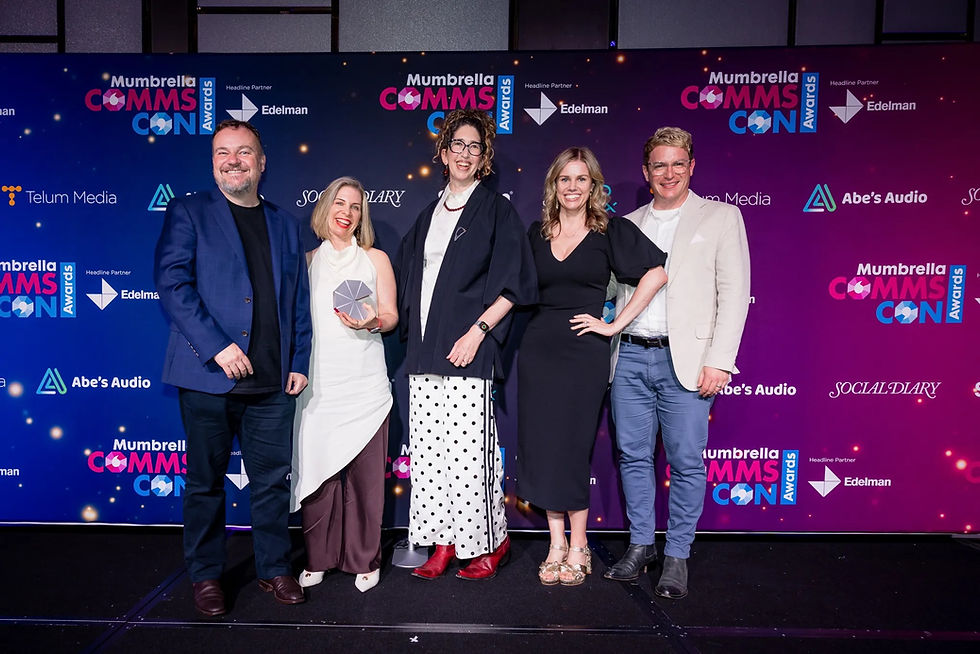
The last known sighting of me on a horse, followed by an unexpected residency in Arles hospital radiology.


Comments